
Restaurants, food trucks, breweries, food halls, and other service-based businesses often rely on physical pager systems to notify customers when orders are ready.
These systems create multiple problems:
The Hands Please team believed there had to be a better solution.
Instead of handing customers a plastic pager, why not send notifications directly to the device already in their pocket?
The challenge was creating a system simple enough for busy vendors to adopt while eliminating as much manual work as possible. The founders were adamant that Hands Please would not become another point-of-sale system. Instead, it needed to integrate into existing workflows and operate almost invisibly in the background.
Restaurant Technology / Food Service SaaS
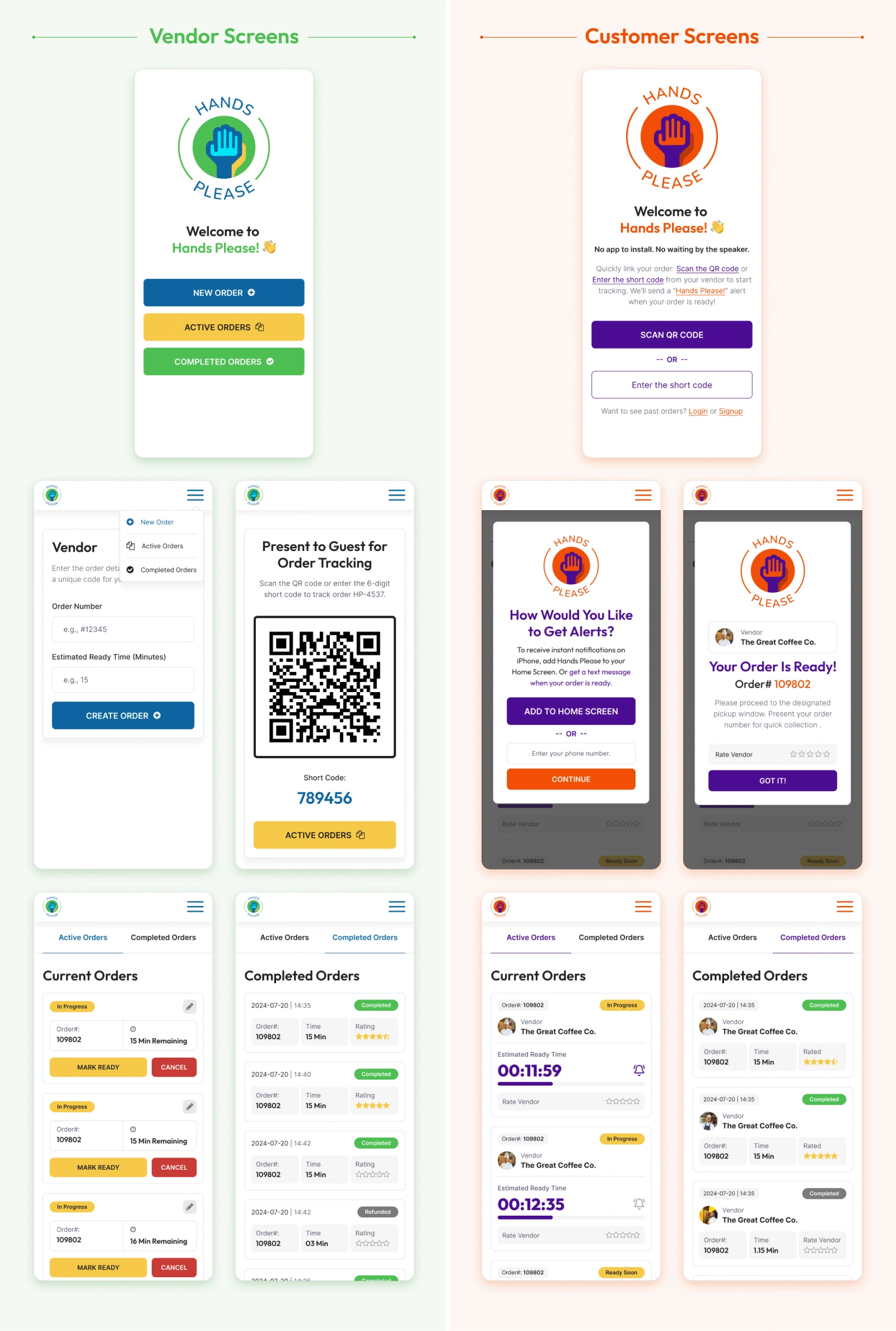

We designed a streamlined customer workflow that eliminated passwords and reduced friction.
Customers could:
The user experience centered around one critical piece of information: “When is my order ready?” Every design decision prioritized delivering that information quickly and clearly.
On the vendor side, we created dashboards that allowed operators to:
A major design goal was ensuring vendors could configure the platform themselves rather than requiring ongoing support from the development team.
One of the most important discoveries during planning was that manual order entry would create adoption barriers.
We researched integration opportunities with major POS platforms including:
The objective was to automatically pull order information from systems vendors already use rather than forcing employees to enter duplicate data. This reduced friction and positioned Hands Please as a complementary tool rather than a replacement system.
The core of the platform was a real-time notification system.
We designed workflows for:
The system was designed to be more reliable and more informative than traditional pagers while requiring no specialized hardware.
To simplify onboarding, we explored multiple connection methods between customers and vendors:
The long-term goal was to make the process easier than receiving a pager while requiring little to no customer setup.
Hands Please moved from concept discussions to a fully designed MVP with customer and vendor workflows mapped and prototyped.
The platform architecture was designed to support:
By choosing a Progressive Web App approach, the founders were able to validate the concept with real vendors before investing heavily in native mobile app development.
The project included plans to pilot the platform with local food truck operators and food truck parks to gather operational feedback before wider rollout. The founders had already begun discussions with multi-location operators to serve as beta testers.