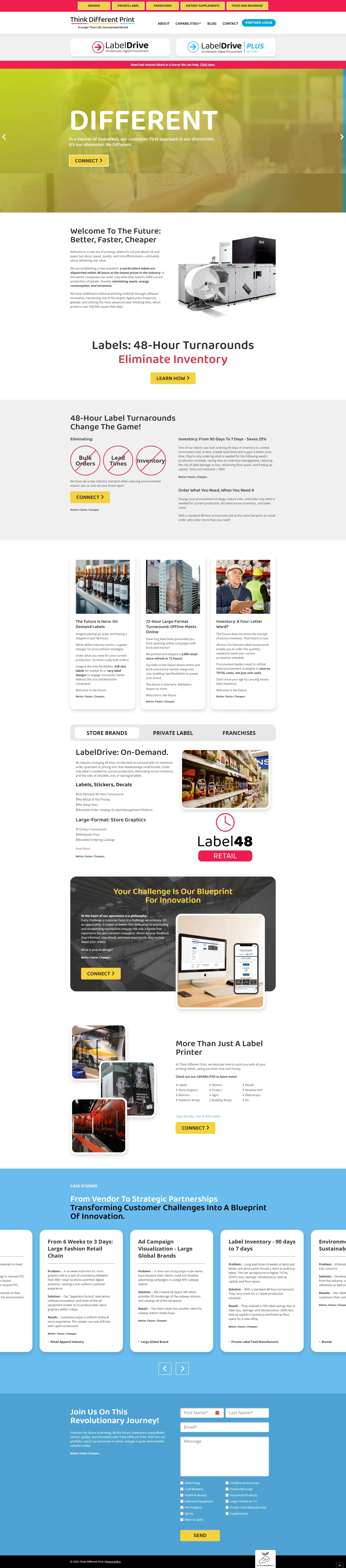
For decades, businesses purchasing labels, packaging, and printed materials were forced to operate within a procurement model built around volume.
The process was inefficient.
Companies routinely faced:
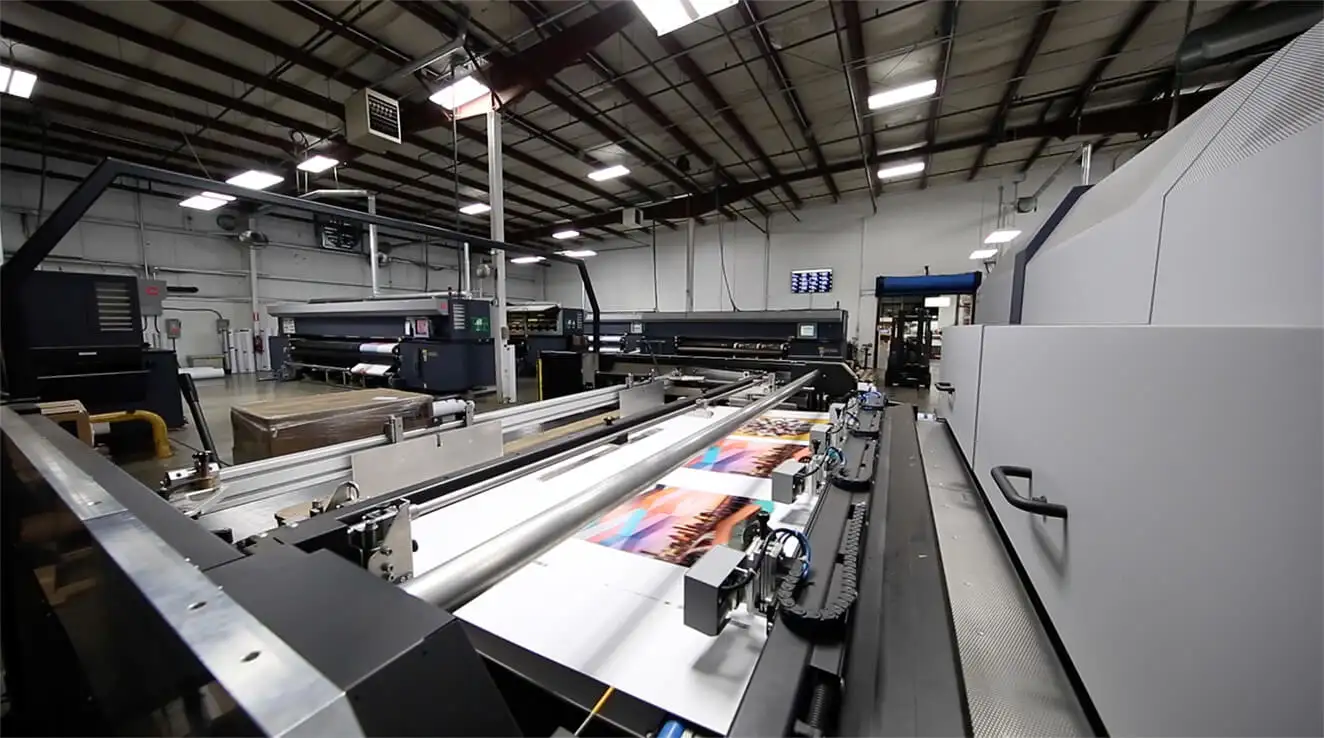
At the same time, Think Different Print’s parent company, Larger Than Life, had spent more than 30 years building expertise in large-format and digital printing.
The challenge wasn’t operational capability.
The challenge was repositioning the organization from a traditional print vendor into a technology-enabled procurement platform.
The company needed a modern digital presence capable of communicating that transformation.

Print Technology, Manufacturing & Procurement
Reversed Out partnered with leadership to redefine both the brand architecture and the digital experience.
Rather than marketing printing services, we focused on communicating a new category:
Print Procurement as a Technology Platform.
As the organization expanded, multiple products, technologies, and business units emerged.
We helped establish a scalable brand ecosystem that clearly defined the relationship between:
This created a structure capable of supporting future growth while reducing market confusion.
Traditional printers compete on price.
Technology companies compete on efficiency.
We shifted the conversation away from printing and toward operational outcomes:
The result was a stronger value proposition that resonated with modern manufacturers and brand managers.
The website evolved from a brochure-style presence into a conversion-focused platform.
Key improvements included:
The goal was to make complex procurement concepts understandable and actionable.
To support growth, we integrated the website directly into the sales ecosystem.
This included:
This allowed the sales team to engage prospects with greater context and precision.
One of the core objectives was reducing friction.
Many procurement systems are intimidating for first-time users.
We implemented a guided experience that helped customers navigate:
The platform was designed to feel less like enterprise software and more like a modern consumer application.